Lost Horizon: The Shangri-La Dialogue

Amid a rising China, the big questions coming into this year’s Shangri-La Dialogue surrounded the Trump administration’s intentions in the Asia Pacific.

Published by Fair Observer, June 5, 2017

By Tom Benner

The lobby of the luxurious Shangri-La Hotel in Singapore — with its high ceilings, marble interior, massive columns and crystal chandeliers — pulsed on the evening of June 2 with anticipation and excitement. People were well-dressed, many in military attire, and they strode purposely by the television lights and camera crews jostling for images and b-roll that might capture the scene.

They were gathered for the opening of the Shangri-La Dialogue, which happens every year at this hotel, generally on the first weekend in June. Defense ministers, security types and journalists from around the world pack into the hotel for Asia’s largest annual defense summit.

Lee Kuan Yew, Singapore’s founding prime minister, started the Shangri-La Dialogue back in 2002, as a way to initiate a regional discussion on peace and security amid the dangers of the day.

The schedule typically follows the same format — participants arrive on late Friday afternoon in time for a gala dinner and a keynote address. Saturday and early Sunday are filled with talks, addresses and panel discussions, with private meetings and media availabilities on the side. By midday Sunday, the dialogue comes to a close. Commentators and journalists rush to meet deadlines, and participants head home until next year. Continue reading …
Water-short Singapore charts a course toward self-sufficiency

The island nation has little water of its own but is determined to shed a reliance on water imports. One key is water recycling, alongside desalination and catchment.

Published by the Christian Science Monitor, Jan. 10, 2017

By Tom Benner

SINGAPORE—Singapore may seem like an unlikely model for the rest of the world when it comes to water management. The island nation has no natural water resources to speak of, and as a newly independent nation half a century ago it was dealing with open sewage, taps running dry in the hot season, and rationing of clean drinking water.

But now, at a time when climate change is making water security an increasingly urgent global issue, Singapore is pointing a path toward self-sufficiency. Continue reading …

The Phenomenon of Donald Trump Will Live On

The causes that have put Donald Trump so close to the White House must be addressed.

Published by Fair Observer, Oct. 18, 2016

I am not worried about Donald Trump winning the US presidential election on November 8. He won’t, the experts keep telling us. And right-thinking people all over the world want to hear that.

But I do worry that Donald Trump, the phenomenon, is bigger than Donald Trump, the candidate. And that his impact will last long after he concedes defeat—or plays the poor loser—on election night. Continue reading …

The causes that have put Donald Trump so close to the White House must be addressed.

Singapore’s Road to Multiculturalism

What lessons can multicultural Singapore offer America in light of the latter’s ongoing racial and religious tensions?

Published by Fair Observer, Sept. 27, 2016

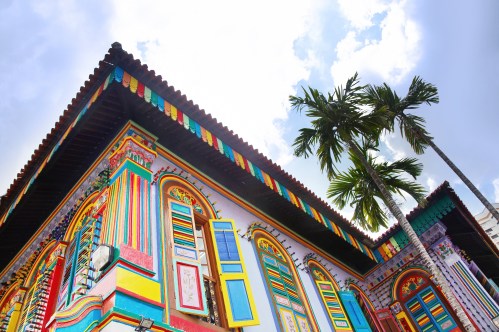
little-india-heritage-centre_hr_01

Little India Heritage Centre. Photo: Singapore Tourism Board

By Tom Benner

Raw feelings over race and religion dominate the American political season. The talk is of walls and deportations to keep some out, “extreme vetting” for immigrants of a certain faith, and a debate over whose lives matter that is playing out in mindless violence on the streets.

The conflicting feelings over people of a different race, color or creed cannot, of course, be resolved to any one person’s or group’s satisfaction. But good answers to the divisiveness seem elusive. How can Americans see past their differences and get along?

As an American, I watch from afar where I live in Singapore, one of the most racially and religiously diverse nations in the world. This small country offers an approach.

Continue reading …

Tensions escalate over South China Sea claims

At security summit, Beijing vows to ignore pending international court ruling while US steps up military patrols.

Published by Al Jazeera English, June 5, 2016

By Tom Benner

Singapore – Asia’s largest defence summit concluded on Sunday amid growing fears of a legal and military showdown in the South China Sea over China’s rapid construction of artificial islands with ports, airstrips and helipads in one of the world’s most bitterly contested waterways.

Admiral Sun Jianguo of the People’s Liberation Army

At the weekend-long Shangri-La Dialogue , Chinese military officials vowed to ignore a legal ruling expected in the next few weeks by the Permanent Court of Arbitration in The Hague on a Philippines’ challenge to China’s growing assertiveness in the key sea route between the Pacific and Indian Oceans.

“We do not make trouble, but we have no fear of trouble,” said Admiral Sun Jianguo, deputy chief of staff of the People’s Liberation Army, who led the Chinese delegation at the summit.

Sun added: “China will not bear with the arbitration award, nor will it allow any infringement of its sovereignty.” Continue reading …

Singapore voters ask: How much change do we want?

Published by Al Jazeera English, Sept. 10, 2015

By Tom Benner

Singapore – Election fever is in full swing on this island nation with Singaporeans turning out by the thousands in recent days for heated rallies and stump speeches in the lead-up to Friday’s snap election.

Social media is abuzz with partisan banter, betting with bookies is brisk, and an air of unpredictability surrounds the outcome in the first national election since the death last March of founding father and political patriarch Lee Kuan Yew.

Facing its greatest challenge after half-a-century of ruling party domination, Lee’s People’s Action Party (PAP) is up against nine opposition parties in the first election in independent Singapore in which every parliamentary seat is being contested. Continue reading …

Serviced apartments: Demographic changes across Asia reflect a new class of mid-level migrant workers

Published by Nikkei Asian Review, August 26, 2015

TOM BENNER, Contributing writer

SINGAPORE — The serviced apartment industry in Southeast Asia — which traditionally serves well-heeled traveling executives with high-end features such as full concierge and butler services — is expanding its business focus to the needs of a less affluent, younger and growing migrant urban workforce.

That’s the finding of a newly released academic study that describes an itinerant class of mid-level workers whose careers demand frequent cross-border relocation and an increasingly permanent need for temporary housing.

Titled “The shifting demographics of the serviced apartment industry in South East Asia,” the paper, published in the “South East Asia Research Journal,” cites a permanent condition of geographic temporariness among a growing proportion of Asia’s middle-class urban workforce. Continue reading …

Singapore’s new generation wants a kinder, chiller country

Published by Global Post, August 12, 2015

By Tom Benner

SINGAPORE — Fifty years after Singapore was accidentally born as an independent country after getting unceremoniously kicked out of Malaysia, it has become one of the most admired and envied countries in the world.

A tiny fishing island with no natural resources, Singapore started off with plenty of disadvantages: malaria, poverty, racial tensions among the ethnic Chinese, Malay and South Indian populations.

Nevertheless, it has since become one of the world’s wealthiest places, with the third-highest percentage of millionaires after Qatar and Switzerland. It places at or near the top of global rankings for safety, cleanliness, ease of doing business, and freedom from corruption. Continue reading …

If you want to try Singapore’s famous street food, you’d best make your trip now

Published by Global Post, July 10, 2015

By Tom Benner

SINGAPORE — When the former British colony of Singapore became a country nearly 50 years ago, its people were sustained by a multiethnic street food culture that would make the island-nation a global food mecca.

This was long before the arrival of celebrity chefs, Michelin-starred restaurants, eye-popping restaurant tabs, and the rise of Singapore as one of most expensive places in the world to live.

Back in the day, food hawkers generally had just one specialty dish, usually served from a rickshaw on the street — often on “opeh,” or banana leaves instead of paper plates. Continue reading …

Halal products draw more Muslim tourists to Japan

Published by Japan Today and the American Chamber of Commerce Journal, July 8, 2015

By Tom Benner

TOKYO — When Rafidah Abd Rahim traveled to Japan from Singapore last year, the recent college graduate was relieved to find a goodly number of lifestyle offerings for Muslim travelers, such as halal food—that is, fare that complies with Islamic dietary guidelines—and easily available prayer rooms.

Rafidah found Sakura House, a Muslim-friendly share house with separate dorms for females and males on different levels, as well as a halal restaurant nearby. And the Tokyo Camii mosque was within walking distance. She also found a variety of eateries serving halal food.

“I was able to broaden my choices,” she says. “Since I was unable to enjoy an authentic ramen [because it sometimes has] pork stock, I was able to enjoy a bowl of the vegetarian version.” Continue reading …