Tokyo Unplugged

Oct. 8, 2014

My first night in Tokyo offers a lesson for tourism planners as Japan seeks to vastly increase the number of its visitors leading up to the 2020 summer Olympics.

Wireless access and mobile connectivity are pretty much a given in the world’s leading cities. Plugging into that global connectivity shouldn’t feel like reinventing the wheel.

So why did I spend my first night in a Tokyo hotel room unplugged and out of reach of all of the things we take for granted today? The ability to check my email, read the news, Google stuff I want to know, and talk in real time with loved ones about my arrival in a new city – I couldn’t do any of that with my smartphone. Continue reading
Tokyo’s plan to become a top global destination city

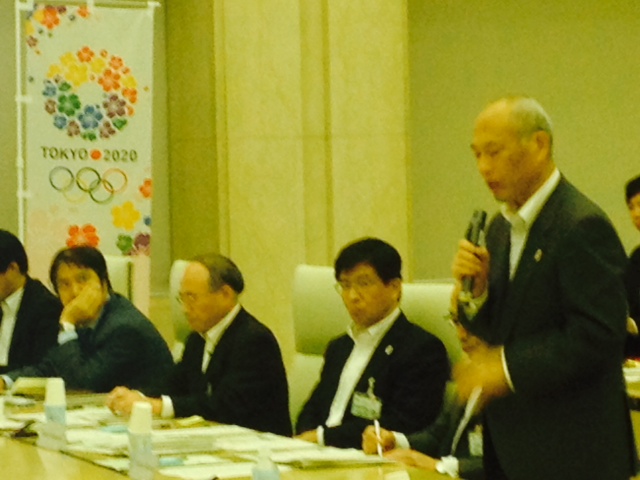
Tokyo Governor Yōichi Masuzoe
Tokyo Governor Yōichi Masuzoe today at the first meeting of the Council to Think of Tokyo’s International PR.

Oct. 7, 2014

The Tokyo Metropolitan Government today got down to the business of planning to host the 2020 summer Olympics, convening the first meeting of the Council to Think of Tokyo’s International PR.

An impressive collection 15 people from various fields (national government, media strategists, think tanks, and journalists) met with Tokyo Governor Yōichi Masuzoe for a frank discussion of what it will take to successfully host the games.

Among the proposals:

Better wireless: despite Tokyo’s reputation as a tech geek center, its wifi services are far behind other international cities. Continue reading

Play ball

 Baseball fan Risa Abe fist-pumps with a model figure outside the Tokyo Dome.

Yomiuri Giants fan Risa Abe fist-pumps with a model figure outside the Tokyo Dome. (Hironobu Itabashi photo)

Oct. 3, 2014

It was warm and sunny today outside the Tokyo Dome, perfect baseball weather, and Kashikawa Kazumi sat in the sun waiting for the start of a Yomiuri Giants open practice game at their home field.

The 75-year-old played baseball in junior high and high school, is a loyal Giants fans, and can’t understand why there’s even a debate about whether to include baseball in the 2020 summer Olympics in Tokyo.

“I never understood it,” he said through a translator. “It’s a sport everyone really likes.”

Baseball has been a part of the Olympics since the 1904 summer games in St. Louis as an exhibition/demonstration sport, and became a medal sport in 1992.

But in 2005, the International Olympic Committee annual meeting voted baseball and softball out of the 2012 Summer Olympics in London, the first time the Olympics called out a sport since polo was eliminated from the 1936 Olympics. In 2009, the IOC again voted to exclude baseball in the 2016 Summer Olympics. Continue reading

The Olympic Curse – or, how do you do it like Barcelona?

Oct. 2, 2014

Hosting a monster event like the Olympics is a major undertaking, one that involves a massive infusion of public money and a realignment of public priorities, all on the bet that the payback will be worth it.

Sometimes, a host city measures its Olympic success more in symbolic and political terms than in dollars and cents.

In 1936, the National Socialist government in Germany, which had been awarded the Games before the Nazi rise to power, saw the summer Olympics in Berlin as a chance to propagandize its views of racial supremacy.

The 1964 summer Olympics in Tokyo allowed Japan to demonstrate it belonged to the community of nations.

Sometimes, the payoff is clear in economic terms. Continue reading

Happy 50th, Shinkansen

BulletTrainPhoto
(Toshikazu Aizawa photo)

Oct. 1, 2014

Japan’s bullet trains began running 50 years ago, on Oct. 1, 1964. The trains that put Tokyo on the fast track to economic emergence are a marvel of clean, fast, and efficient travel, and an example for the rest of the world to see how investment in infrastructure pays off in the lives of everyday citizens.

The bullet trains began running with just over a week before the opening of the 1964 summer Olympics in Tokyo, and came to symbolize Japan’s transformation from wartime devastation.

Japan was the first country to build completely new and dedicated railway lines for a new high-speed train network (Shinkansen means “new trunk line”), and today bullet trains connect most parts of the country and make business and pleasure travel into Tokyo and other urban centers far easier and faster than conventional surface rail. Continue reading

For Tokyo, Olympic success in ’64 and hurdles to 2020

Sept. 30, 2014

In 2020, Tokyo will become the first Asian city to host the summer Olympics twice.

The 1964 summer Olympics in Tokyo were the first to be held in Asia, and marked a major turning point for Japan, a return to the international stage for a country still recovering from its World War II firebombing and lingering global resentments.

The 1964 Olympics were a huge success for Japan, and not only in terms of international symbolism or gold medals.

The buildup to ’64 saw the transformation of Tokyo into a sleek, modern and thriving megalopolis, complete with high-speed bullet trains symbolizing Japan’s economic emergence. Highways, expressways, and subway lines were built, and Haneda Airport was modernized. Beautifying the city and keeping its streets clean became a focus for Tokyo that still remains. Continue reading

Tokyo: The 2020 Olympic Vision

Sept. 29, 2014

The 2020 Tokyo summer Olympics: Let the games begin.

The buildup to hosting the 2020 summer games has been under way ever since Tokyo won the bid as host city last fall, beating out fellow finalist cities Istanbul and Madrid.

Now the race is on to get ready, and even with six years to plan, a host city needs to get its act together or suffer the consequences. Just ask Sochi.

As part of the unfolding Tokyo 2020 buildup, I am one of six journalists from around the world who will be spending the month of October in the Japanese capital, at the invitation of the Foreign Correspondents’ Club of Japan and the Tokyo Metropolitan Government. The Dateline Tokyo fellowship program will invite a new set of journalists each year heading into 2020. Continue reading

Aerospace industry is making an Asian pivot of its own

Published by Christian Science Monitor Global Outlook, March 11, 2014.

The aerospace industry – and its supporting services, from parts and equipment manufacturers to maintenance, repair, and overhaul firms – are pivoting to Asia. The Asia-Pacific region will account for one in three new aircraft deliveries over the next two decades. Continue reading

Up, up, and away at the Singapore Airshow

Published by Singapore Business News, March 9, 2014

US firms race to meet demand in the world’s fastest growing aviation market, making an Asian pivot of their own. Innovations in aviation from the airshow. An American aerospace manufacturer takes off in Singapore.

Little India’s 50-dollar men: A new look

Published by Element Magazine, Feb. 18, 2014

By Tom Benner

Prostitution is legal in Singapore. Men looking to pay for sex with women can go to the red-light district in Geylang, or the shopping centre Orchard Towers, nicknamed the “Four Floors Of Whores”.

But male prostitution is a trickier proposition. For starters, it’s illegal for two men to have sex in Singapore – a homosexual act is punishable by up to two years in jail. There is no regulated industry, no legal sanction, for male prostitution.

It is an open secret that gay men go to Little India in the hopes of meeting other willing men, particularly young South Asian foreign workers looking for extra cash. A noted 2006 documentary by Channel NewsAsia exposed the popularity of Little India as a place to meet and pick up South Asian men.

The potential headlines made for a juicy, if sensationalised, story: “Homosexual prostitution in Singapore’s Little India” … “Migrant workers by day, male prostitutes by night” … “Going undercover with commercial boys.” Continue reading